
Water softener resin replacement is rarely due before the ten-year mark: resin maker Purolite says good softening resin can run reliably for more than a decade in a softener that’s working properly. Chlorine and iron are what cut that life short. Before you order new resin, rule out the cheaper faults first: a bypass left open, an empty brine tank, or a softener that has stopped regenerating.
On this page
What wears softener resin out
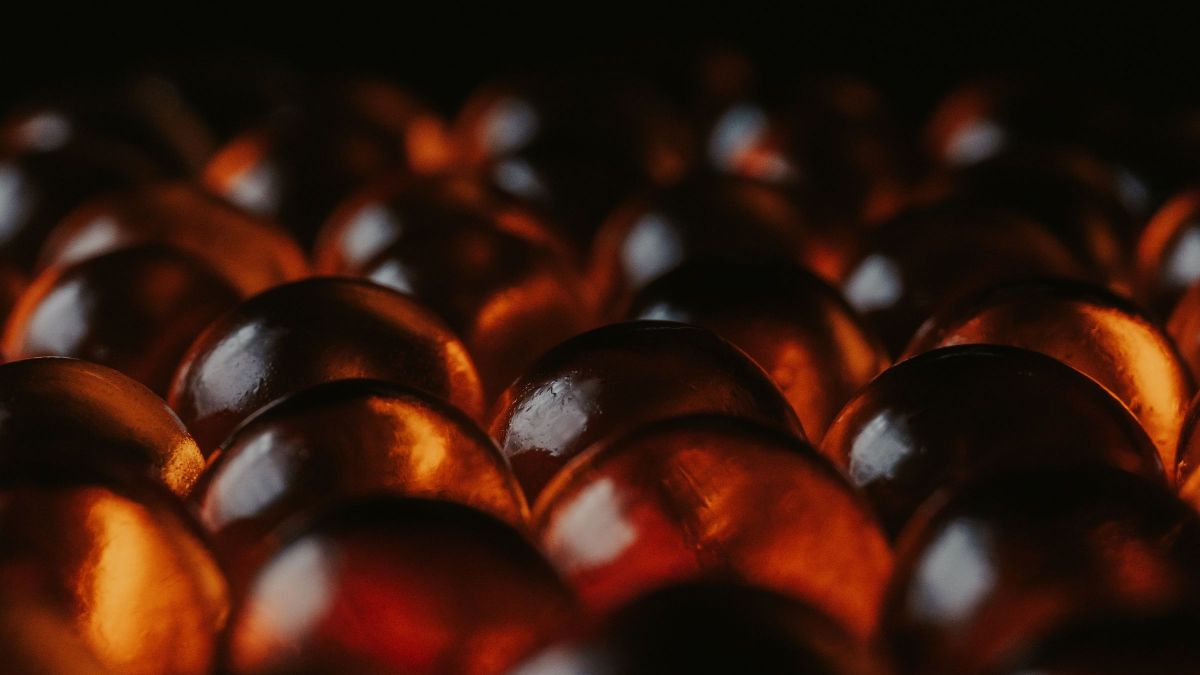
The resin is the bed of small amber beads inside the tall tank. Hard water flows through it, the beads swap calcium and magnesium for sodium, and every regeneration rinses them with brine so they can do it again. Done properly, that cycle can repeat for years.
Purolite names two problems that shorten resin life far more than ordinary use does: oxidising chemicals added to the water supply to disinfect it, and iron fouling. In extreme cases, it says, the two together can cut resin life to less than a year. Heat and the grade of resin decide how fast the damage happens.
Chlorine and chloramine
Every oxidising chemical attacks the cross-links that hold a resin bead together. At low levels the effect is small: Purolite reports little loss of life at 0.3 ppm of free chlorine in cold water. Above that, its rule of thumb for premium softening resin is blunt. Each 1 ppm of chlorine halves the resin’s life, and each further 1 ppm halves it again.
| Chlorine in the incoming water | Share of normal life left | If normal life is 10 years |
|---|---|---|
| 0.3 ppm | Little reduction (cold water) | About 10 years |
| 1 ppm | 50% | About 5 years |
| 2 ppm | 25% | About 2.5 years |
| 3 ppm | 12.5% | About 1.3 years |
Most large US utilities disinfect with chloramine, which is chlorine combined with ammonia. San Diego is a typical example: its 2025 report gives an average chloramine residual of 1.75 ppm across the distribution system, with readings up to 3.8 ppm. Purolite doesn’t publish a separate figure for chloramine, but it is clear that all oxidising agents attack the resin, and that warmer water speeds the damage up. A softener in a hot garage has a harder life than one in a cool basement.
Iron
Softening resin grabs iron and holds it far more tightly than calcium. Brine can’t pull all of it back off, so iron builds up slowly and takes the place of hardness capacity. Purolite also notes that iron speeds up oxidative attack, so iron and chlorine together are worse than either alone.
ResinTech puts a number on what its standard resin can cope with: no more than 1 mg/L of iron for every 17 mg/L of hardness. That works out at roughly 1 mg/L of iron per grain per gallon of hardness.
| Hardness | Hardness (mg/L) | Iron the resin data sheet allows |
|---|---|---|
| 5 gpg | 86 | Up to 5.0 mg/L |
| 10 gpg | 171 | Up to 10.1 mg/L |
| 15 gpg | 257 | Up to 15.1 mg/L |
| 20 gpg | 342 | Up to 20.1 mg/L |
In practice, homes on well water with iron are the ones that lose resin early. A resin cleaner or iron-fighting salt slows the build-up; a dedicated iron filter ahead of the softener stops it.
Resin grade
Resin beads are polystyrene held together by divinylbenzene (DVB). The more DVB, the tighter the bead and the better it resists oxidation. Standard softener resin is 8% cross-linked. Purolite warns that some low-priced resins have 6% DVB or less, which gives the weakest resistance to oxidative attack. If your water is chlorinated or chloraminated and you’re buying resin anyway, a higher cross-link grade is the one to ask for.
Signs your softener resin needs replacing
Resin rarely fails overnight. It loses capacity a little at a time, so the first sign is usually hard water just before a regeneration that clears up just after it. Later you may see:
- Hard water most of the time, even though salt is being used at the usual rate.
- Lower water pressure through the softener. Purolite describes badly oxidised beads turning soft and jelly-like near the top of the bed, which raises the pressure drop.
- Beads in aerators or toilet tanks. This usually means the riser tube or the screen at its base has cracked and is letting resin through. It’s a repair either way, and a good moment to look at the resin.
- Age. A softener well past ten years on chlorinated city water is a likely candidate.
The two-test check
Test the softened water twice with a hardness strip: once on the morning after a regeneration, and once on the day before the next one. The pattern tells you where to look.
| After regeneration | Day before next regeneration | Most likely cause |
|---|---|---|
| Soft | Soft | Resin is fine. Any spotting has another cause. |
| Soft | Hard | Capacity is falling short: worn or fouled resin, or a hardness setting that’s too low. |
| Hard | Hard | Usually not the resin: check bypass, salt, brine draw and whether it regenerates at all. |
Worked example: what a 25% capacity loss looks like
A family of four on 15 gpg water softens about 4,800 grains a day (4 × 80 gallons × 15 gpg). A softener sold as 32,000 grains holds roughly 1.07 cubic feet of resin. Regenerated at an efficient 6 lb of salt per cubic foot, that bed delivers about 21,300 grains, or 4.4 days of soft water.
Now let iron foul a quarter of the bed. Capacity drops to about 16,000 grains, which runs out after 3.3 days. If the valve still regenerates every four days, the household gets around 16 hours of hard water at the end of every cycle, while the salt use looks perfectly normal. That’s the “soft, then hard” pattern in the table above.
Rule out these faults before buying resin
Most “my softener stopped working” problems aren’t the resin. These checks cost nothing.
| Symptom | Check first | Our guide |
|---|---|---|
| Salt level never drops | Salt bridge, blocked injector, brine line | Softener not using salt |
| Hard water everywhere, suddenly | Bypass valve position | Bypass valve guide |
| Runs out before regenerating | Hardness setting and schedule | How often to regenerate |
| Brine tank full of water | Float, brine valve, drain line | Brine tank water level |
How much replacement resin you need
Resin is sold by the cubic foot. The tank’s label or the manual usually states the volume. If it only gives a grain rating, you can estimate the volume from it.
| Rated capacity | Resin volume | Litres | Weight, about | Capacity at 6 lb salt/cu ft |
|---|---|---|---|---|
| 24,000 grains | 0.8 cu ft | 23 | 42 lb | 16,000 grains |
| 32,000 grains | 1.07 cu ft | 30 | 55 lb | 21,300 grains |
| 40,000 grains | 1.33 cu ft | 38 | 69 lb | 26,700 grains |
| 48,000 grains | 1.6 cu ft | 45 | 83 lb | 32,000 grains |
| 64,000 grains | 2.13 cu ft | 60 | 111 lb | 42,700 grains |
Whatever you buy, look for resin certified to NSF/ANSI/CAN 61 (or the WQA Gold Seal), which covers materials that touch drinking water.
Water softener resin replacement, step by step
Rebedding a home softener is a half-day job if the valve unscrews cleanly. Follow your valve’s manual where it differs from these general steps, and get help lifting: a tank full of wet resin is heavy.
- Bypass and unplug. Put the softener in bypass, unplug it, and open a cold tap to release pressure.
- Remove the valve. Disconnect the plumbing and the brine and drain lines, then unscrew the control valve from the top of the tank.
- Empty the tank. Scoop or wet-vacuum the old resin out. Note whether there’s a layer of gravel at the bottom, so you can put the same amount back.
- Inspect the riser tube. Check the tube and the screen at its base for cracks. A damaged one is the usual reason beads reach your taps.
- Refill. Cover the top of the riser with tape so nothing falls in, half-fill the tank with water, and pour the new resin in through a funnel with the riser held in the centre.
- Reassemble. Remove the tape, lubricate the O-rings with a silicone grease made for potable water, refit the valve and reconnect everything.
- Restart slowly. Open the bypass gradually to push out air, run a manual regeneration, then test the softened water the next day.
Clean, replace the resin or buy a new softener?
Iron fouling can be partly reversed with a resin cleaner, and it’s worth trying first on well water. Oxidative damage can’t: Purolite calls it irreversible, because the bead structure itself is broken. If the two-test check points at capacity and cleaning doesn’t bring it back, the resin has to go.
Replacing just the resin makes sense when the control valve and tank are in good shape. If the valve is also failing, or the softener was undersized for your household all along, it may be time to size a new one properly instead.
Sizing a replacement? The calculator works out the grains your household needs per week and the smallest standard size that covers it.
Frequently asked questions
How long does water softener resin last?
More than ten years in a well-run softener, according to Purolite. Chlorine, chloramine, iron and warm water shorten that, sometimes dramatically.
Can you clean softener resin instead of replacing it?
Partly. Resin cleaners remove some of the iron that fouls the bed. They can’t repair beads that chlorine has broken down.
What does bad softener resin look like?
Healthy standard resin is made of firm, round amber beads. Purolite describes oxidised beads as soft and, in severe cases, jelly-like. Broken fragments in the brine tank or at your taps are another warning sign.
Does a softener remove chlorine or chloramine?
No. A softener only removes hardness, and the disinfectant passes through and works on the resin as it goes. A carbon filter is the tool for that job; see our softener vs filter guide.
How much salt does a softener use after a resin change?
The same as before for the same settings. If the old resin was worn, though, you may notice the water stays soft right up to each regeneration again.
Sources
- Purolite (Ecolab): Main factors that affect softening resin performance and life
- ResinTech: CG8 product specification sheet (PDF, via Lenntech): 8% cross-link, iron limit, shipping weight, NSF/ANSI/CAN 61
- Aldex C-800 LT softening resin technical data (via Knowde): 30,000 grains/cu ft at 15 lb, 20,000 at 6 lb
- City of San Diego: 2025 Annual Drinking Water Quality Report (PDF): chloramine residual