
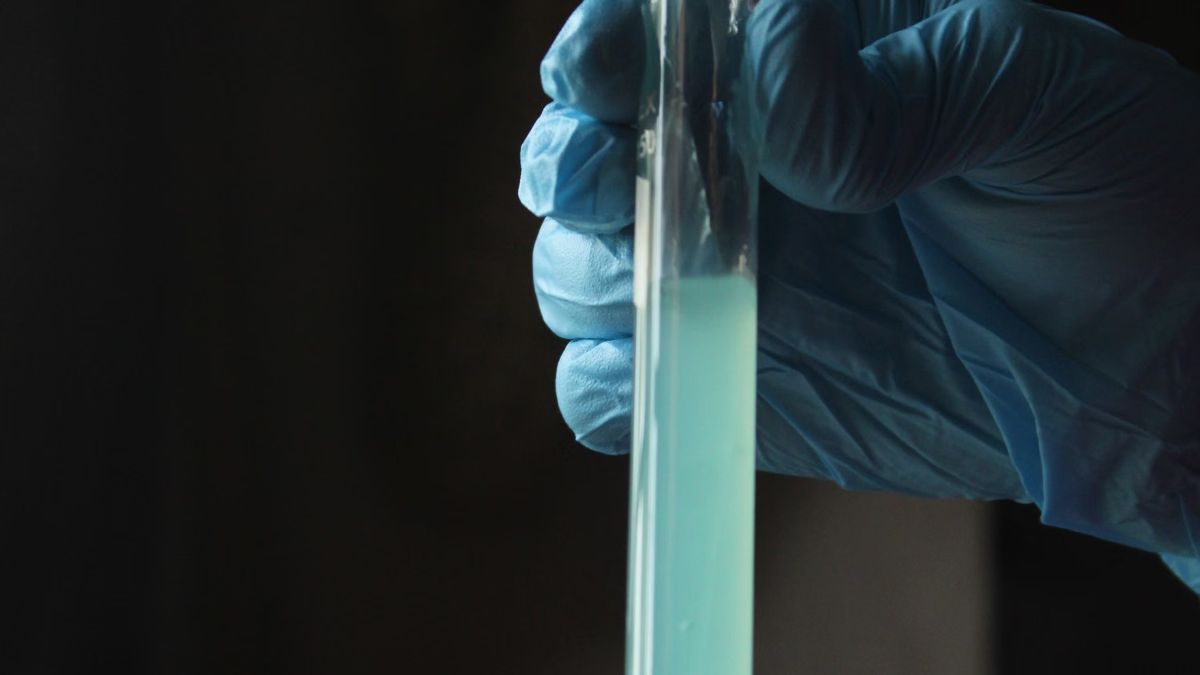
To test water hardness at home, dip a hardness test strip in a glass of cold tap water and match the colour to the chart, or use a drop-count titration kit for a more exact number. On mains water, first check your utility’s annual water quality report, which usually lists hardness for free. A certified lab test costs about $20 according to Penn State Extension, and is the best choice for private wells.
On this page
Each method answers a slightly different question. This guide compares them, walks through a strip test step by step, and shows what to do with the number once you have it.
Four ways to find your hardness
| Method | Cost | Gives you | Best for |
|---|---|---|---|
| Utility water quality report | Free | Average and range for the whole system | Mains water; first step for everyone |
| Test strips | A few dollars | A band (for example “about 120 ppm”) | Quick checks, checking a softener works |
| Drop titration kit | More than strips | A number in gpg or mg/L, step by step | Setting a softener or dishwasher precisely |
| Certified lab | About $20 for hardness (Penn State Extension) | A precise result, plus other tests if you order them | Private wells, buying treatment equipment |
The Minnesota Department of Health lists two of these for measuring hardness, a test kit or an independent lab, and reminds customers of community water systems that they can simply ask their utility.
Start with your water report (mains water)
US community water systems send customers a Consumer Confidence Report every year. Hardness isn’t a regulated contaminant, so it usually sits in a table of “other” or “secondary” parameters. Our step-by-step guide to finding hardness in your water quality report shows where to look and how to handle the units. In the UK, water companies publish hardness through postcode checkers.
A report gives a system-wide average and range. Your tap can differ if your area gets a blend of sources, which is the case in parts of the Las Vegas valley during summer. A home test confirms what reaches your house.
How to use a water hardness test strip
- Use cold water from an unsoftened tap. If you have a softener, test a tap that bypasses it (often an outdoor spigot), unless you want to check the softener itself.
- Run the tap for a minute so you’re testing water from the main, not water that sat in the pipes.
- Fill a clean glass, rinsed with the same water. Soap residue can throw off the result.
- Dip the strip for the time on the pack, usually a second or two, then shake off the excess.
- Read the colour at the stated time in daylight, against the chart on the pack. Colours keep changing after that.
- Note the unit. Strips may read in ppm (mg/L), gpg or German degrees, and some packs print two scales.
If the colour sits between two blocks, take the higher one. Store the pack closed and dry: moisture ruins unused strips.
How to use a drop titration kit
These kits add a coloured indicator to a measured water sample, then count drops of a titrating solution until the colour changes. The kit’s instructions state what each drop represents, so the drop count converts straight into gpg or mg/L. Use the sample tube supplied, add drops slowly and swirl after each one; the change is easy to overshoot.
Titration kits give a finer reading than strips, which matters when you’re choosing between two softener sizes or entering a hardness setting.
The soap test (a rough check only)
Add 10 drops of pure liquid castile soap to a clear bottle a third full of tap water and shake hard. Lots of lasting suds suggests soft water; a cloudy, flat result with few bubbles suggests hard water. The USGS explains why: calcium and magnesium react with soap to form scum instead of lather. It can’t give you a number, so treat it as a reason to do a proper test, not a substitute for one.
Testing well water
Nobody tests a private well for you. The Vermont Department of Health recommends testing private wells and springs for hardness every five years, as part of a wider chemical test. Penn State Extension notes that testing is valuable to confirm whether hardness is present, and at what level, before you install treatment.
A lab test also catches iron and manganese, which matter for softener sizing: manuals such as Pentair’s add 5 gpg to the hardness setting for every 1 ppm of iron.
What your result means
| ppm or mg/L | gpg | Class | What to expect |
|---|---|---|---|
| 0–60 | 0–3.5 | Soft | Little or no scale |
| 61–120 | 3.6–7.0 | Moderately hard | Some spotting; scale over time |
| 121–180 | 7.1–10.5 | Hard | Scale on kettles, heaters and taps |
| Over 180 | Over 10.5 | Very hard | Fast scale, poor lather |
Penn State Extension notes that homeowners often start noticing problems at around 120 mg/L, and the Minnesota Department of Health suggests considering a softener above 7 gpg (120 mg/L) if you want to protect appliances. For the full chart in every unit, see the water hardness scale; to convert, use the hardness converter.
Testing a water softener
A strip is the quickest way to check a softener. Test the raw water at a bypassed tap, then the softened water at a kitchen or bathroom tap. Softened water should read at or near zero. If it reads close to the raw water, the softener isn’t softening: check the salt, look for a salt bridge and make sure the bypass valve is closed.
Worked example
A strip reads 250 ppm on a family of four’s unsoftened tap. 250 ÷ 17.118 = 14.6 gpg, which is very hard on the USGS scale. That’s the number to enter on a softener valve (rounded to 15), and at 80 gallons per person a day it means 4 × 80 × 14.6 = 4,672 grains a day, or 32,700 a week. The softener size calculator turns that into a size.
Frequently asked questions
Are water hardness test strips accurate?
They’re accurate enough to place water in a band and to check whether a softener is working. For a precise number, use a titration kit or a lab.
How can I test water hardness without a kit?
Look up your utility’s water quality report, or do the soap test for a rough idea. Neither replaces a real test on a private well.
Should I test hot or cold water?
Cold. Heating can drop some hardness out as scale, so hot water can read lower than what enters the house.
How often should I test?
Mains water: when you install or adjust treatment, and if you notice a change. Private wells: every five years for hardness at minimum, as Vermont’s health department recommends.
Why does my test differ from the water report?
The report gives system averages and ranges; your result is one sample, read in steps. A difference of one strip band is normal. A large gap suggests a different source, a blend, or a softener you forgot to bypass.
Sources
- Penn State Extension: Water tests for households using public water supplies (Aug 26, 2022)
- Minnesota Department of Health: Home water softening (PDF, Sept 2019)
- Vermont Department of Health: Hardness in drinking water
- USGS FAQ: What are hard water and soft water?
- USGS Water Science School: Hardness of Water