
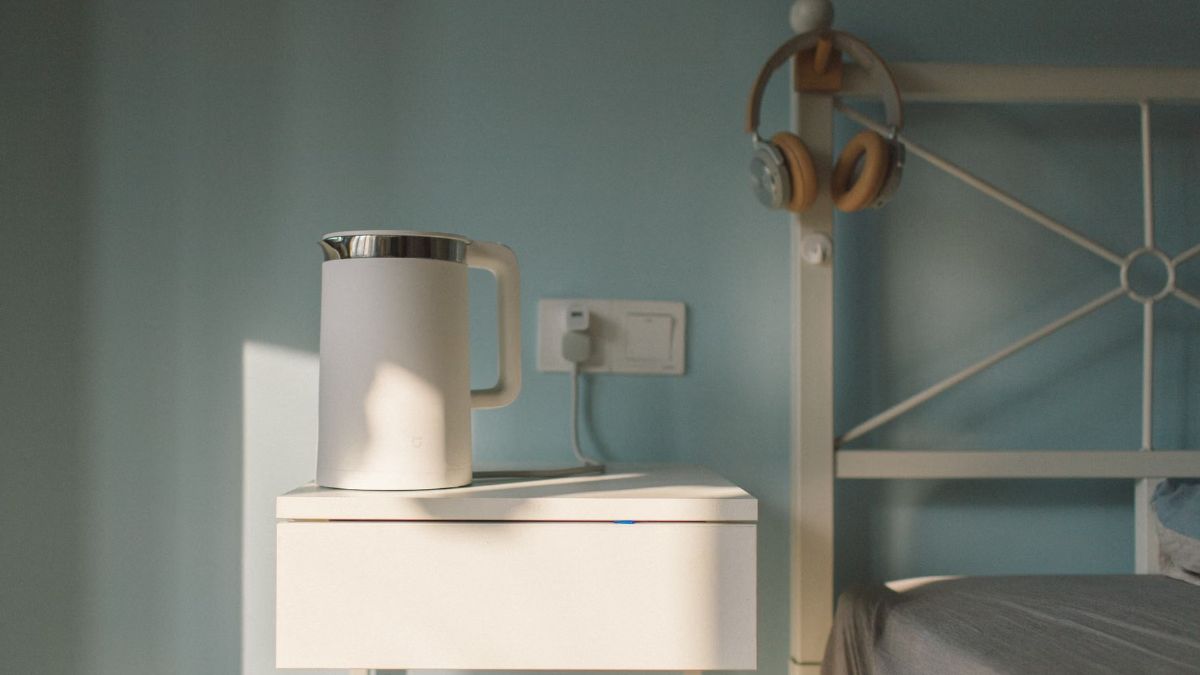
To descale a kettle, boil a half-full kettle of water, switch it off and unplug it, stir in 1 to 2 tablespoons of citric acid and leave it 15 to 20 minutes; or boil a 50/50 mix of white vinegar and water and let it cool. Pour it away, rinse, then boil and discard clean water two or three times. Both methods come from consumer group Which?, and both work because limescale is calcium carbonate, which acid dissolves.
On this page
Below are the two methods step by step, how much acid a crust really needs, how often to descale for your water hardness, and what not to do.
Method 1: citric acid (fastest, no smell)
- Fill the kettle about halfway with water and boil it.
- Switch it off and unplug it.
- Add 1 to 2 tablespoons of citric acid. It will fizz as it reacts with the scale.
- Leave it for 15 to 20 minutes.
- Pour it away and rinse. Wipe any loose flakes with a soft sponge; scrub stubborn patches gently.
- Fill with clean water, boil and pour away. Repeat once or twice.
Which? rates citric acid “just as good” as vinegar, with the advantage that it doesn’t leave a smell. Food-grade citric acid is sold in supermarkets and baking aisles.
Method 2: white vinegar
- Mix equal parts white vinegar and water and fill the kettle about three-quarters full.
- Bring it to the boil, then switch off and leave it to cool.
- Pour it away, rinse, and scrub any remaining patches.
- Boil clean water and pour it away two or three times until the vinegar smell has gone.
Ventilate the kitchen: boiling vinegar is pungent. Wessex Water suggests a gentler version with lemon juice and lemon chunks, boiled and left to cool for a few hours; it’s slower, but smells better.
How much acid does your kettle need?
Acid doesn’t scrape scale away, it reacts with it, and each gram of acid can only dissolve so much. From the reaction ratios and molar masses:
| Dose | Limescale dissolved, at most |
|---|---|
| 1 tablespoon citric acid (about 10 g) | 7.8 g |
| 2 tablespoons citric acid (about 20 g) | 15.6 g |
| 1 cup (237 mL) white vinegar, 5% acidity | 9.9 g |
| 750 mL of 50/50 vinegar and water (375 mL vinegar) | 15.6 g |
A thin film of scale weighs a gram or two, so one dose clears it with room to spare. A thick, crunchy crust can weigh far more. If the fizzing stops and scale remains, the acid is spent: pour it out and use a fresh dose rather than leaving the old one longer.
How often to descale, based on your water
How fast a kettle scales depends on how hard your water is and how much of the hardness is “temporary” (bicarbonate) hardness, the part that turns into scale when heated. This table shows the upper limit: the scale that would form if all of the water’s hardness came out in the kettle.
| Water hardness | Scale per year, at most | Citric acid to dissolve it | Example |
|---|---|---|---|
| 100 mg/L (5.8 gpg) | 55 g | 70 g | Austin averages 93 mg/L |
| 150 mg/L (8.8 gpg) | 82 g | 105 g | Hard (USGS) |
| 200 mg/L (11.7 gpg) | 110 g | 140 g | Very hard |
| 280 mg/L (16.4 gpg) | 153 g | 196 g | Las Vegas |
| 350 mg/L (20.4 gpg) | 192 g | 245 g | San Antonio runs up to 342 mg/L |
The practical reading: in soft to moderately hard areas, descaling every few months is plenty. On very hard water, a kettle can collect more than 10 g of scale a month in the worst case, so monthly descaling keeps it from building a thick crust that takes repeated doses. Rather than a calendar, descale when you see a white film or flakes in your tea. Not sure how hard your water is? See the water hardness scale.
Keeping scale out of the kettle
- Empty it after use. Water left standing and reheated keeps depositing scale.
- Squeegee the shower too. The same minerals that crust the kettle haze the shower glass: see hard water stains on shower glass.
- Use a scale collector. Anglian Water suggests a wire mesh collector in the kettle to catch flakes.
- Choose metal over plastic. Wessex Water notes that in hard water areas metal kettles hold up better than plastic ones.
- Soften the water. A whole-house softener stops scale at the source, though many water companies suggest keeping the kitchen cold tap unsoftened for drinking. See what size water softener you need.
Mistakes to avoid
Mixing acid with bleach. The New Jersey Department of Health warns that bleach mixed with an acid produces chlorine gas. Never add any other cleaner to a descaling solution.
Adding citric acid with the kettle still on. Which? says to switch off and unplug first. Hot acid fizzes up quickly, so add it slowly.
Scraping with metal. Knives and scourers scratch the inside and leave a rough surface that scale grips more easily.
Skipping the rinse boils. One quick rinse leaves enough vinegar or acid to taste. Boil and discard clean water two or three times.
Ignoring the manual. Some kettles have a removable filter or a concealed element with their own cleaning instructions. Follow them where they differ.
Frequently asked questions
Is citric acid or vinegar better for descaling a kettle?
Both work. Citric acid is faster to use and leaves no smell; a tablespoon does roughly the work of a cup of vinegar. Vinegar is handy if it’s what you have.
Can I use lemon juice to descale a kettle?
Yes. Lemon juice contains citric acid. Which? suggests a 50/50 mix with water, boiled and left about 30 minutes, and Wessex Water a version with lemon chunks left to cool for a few hours. It’s milder, so heavy scale may need a second round.
Is limescale in a kettle harmful?
No. Which? notes limescale is harmless to consume, though it can affect taste, and Anglian Water describes the scum it leaves on tea as harmless but unsightly.
Can I leave vinegar in a kettle overnight?
There’s no need. Once the reaction stops, extra time doesn’t dissolve more. Use a fresh dose if scale remains.
Can I use baking soda?
Baking soda is alkaline, so it doesn’t dissolve limescale. Which? mentions adding a teaspoon to vinegar as an optional extra, but the acid does the descaling; watch for it bubbling over.