
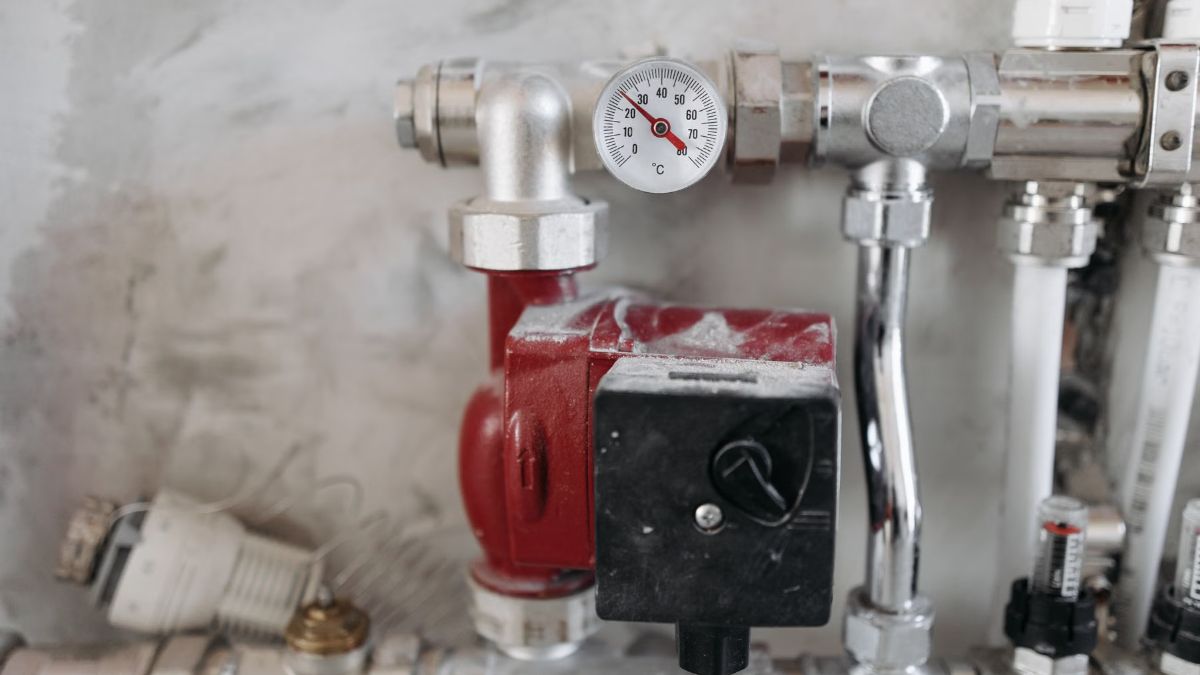
Flush a tank water heater once a year, or every six months if you have hard water: that’s Rheem’s advice, and A. O. Smith and the City of Anaheim say the same for mineral-rich water. Flushing drains out the sediment and scale that settle at the bottom of the tank. Turn off the power or gas and the cold supply, drain through a hose until the water runs clear, then refill completely before turning the heat back on.
On this page
This guide covers why hard water fills a tank with sediment, the warning signs, a step-by-step flush based on the manufacturers’ instructions, and the checks worth doing at the same time.
Why hard water fills a heater with sediment
Heating hard water makes part of its calcium and magnesium drop out as scale. In a tank heater, those flakes and grains settle on the bottom, right where the burner or lower element does its work.
How much mineral passes through depends on your hardness and how much hot water you use:
| Hot water a day | At 10 gpg | At 15 gpg | At 20 gpg |
|---|---|---|---|
| 30 gallons | 7.1 kg | 10.6 kg | 14.2 kg |
| 50 gallons | 11.8 kg | 17.7 kg | 23.7 kg |
| 70 gallons | 16.6 kg | 24.8 kg | 33.1 kg |
Even if only a small share stays in the tank, it accumulates year after year, which is what the warning signs below are about.
Signs your water heater needs flushing
Rheem lists these as signs it’s time:
- rumbling or popping noises from the tank;
- rusty or cloudy hot water;
- running out of hot water sooner than usual;
- longer recovery times between showers;
- rising energy bills without more use.
How often to flush
| Source | Normal water | Hard water |
|---|---|---|
| Rheem | Once a year | Every 6 months |
| A. O. Smith | Annual service, including sediment flushing | Service twice a year |
| City of Anaheim | – | Drain tank heaters every 6 months (high-mineral area) |
Rheem adds that heavy hot water use or visible sediment can call for flushing more often. If you’re not sure whether your water counts as hard, check your water quality report or our hardness scale; anything over about 7 gpg (120 mg/L) is hard on the USGS scale.
Find your hardness in gpg. Convert the figure from your utility’s report or a test strip.
How to flush a tank water heater
These steps follow Rheem’s published instructions. Check your own heater’s manual, and call a professional if you’re unsure about gas or electrical parts, as Rheem advises.
- Turn off the heat and the water. Switch off the electricity or set the gas control to off, and close the cold water inlet valve.
- Attach a hose to the drain valve near the bottom of the tank. Run the other end to a floor drain, outside, or a container that won’t be damaged by hot water.
- Open the pressure relief valve, then the drain valve, and let the tank drain completely to remove sediment. A. O. Smith’s guidance is to drain until the discharge runs clear.
- Close the drain valve, disconnect the hose and close the pressure relief valve.
- Refill. Open all the hot water taps in the house, then turn the cold water inlet back on.
- Restore the heat. When water flows steadily from each tap, close them, then turn the electricity or gas back on.
The order matters: the heat goes back on only once the tank is full and water runs steadily from the taps.
Safety
- The water in the tank can be very hot. Let it cool for a while if you can, and keep hands and pets clear of the hose outlet.
- Route the hose where hot water won’t damage anything, as Rheem warns.
- If the drain valve clogs with sediment, A. O. Smith notes it may need clearing or replacing.
Checks to do at the same time
Anode rod
The anode rod corrodes so the tank doesn’t. A. O. Smith says to inspect it yourself or have it inspected once a year, with a professional examination every five years, and to replace it once 6 inches of core wire is exposed or the rod is mostly gone.
Temperature and pressure relief valve
A. O. Smith’s technicians test it at each annual service: open it to check water flows, then make sure it closes without dripping. A valve that sticks or leaks needs replacing.
Tankless heaters are different
Tankless units don’t collect sediment in a tank; scale forms inside the heat exchanger instead. They need descaling with a pump and solution rather than draining. The City of Anaheim recommends doing it once a year in its high-mineral area, and some warranties exclude scale damage altogether. Our guide to tankless water heaters and hard water covers the procedure and the warranty limits.
Cutting down on sediment
Flushing removes sediment; softer water stops it forming. A water softener removes the hardness before it reaches the heater. Our do I need a water softener checklist helps you decide, and how to remove limescale covers the rest of the house.
Considering a softener? See the size and salt use for your hardness and household before you compare prices.
Frequently asked questions
How often should I flush my water heater with hard water?
Every six months, according to Rheem and the City of Anaheim. A. O. Smith recommends servicing twice a year in hard water areas.
What happens if you never flush a water heater?
Sediment builds up on the bottom of the tank. Rheem lists rumbling noises, less hot water, slower recovery and higher energy bills as the result.
How long does it take to flush a water heater?
It depends on the tank size and how much sediment there is; Rheem doesn’t give a fixed time. Drain until the water runs clear, then let the tank refill fully before turning the heat back on.
Do tankless water heaters need flushing?
They need descaling rather than draining. The City of Anaheim recommends once a year in its high-mineral area; see our tankless guide.