
The difference between hard water and soft water is the amount of dissolved calcium and magnesium: soft water has up to 60 mg/L (3.5 gpg) on the USGS scale, hard water has 121 to 180 mg/L and very hard water more than that. You can see the difference in soap that won’t lather, spotted glasses and scale in kettles; you can measure it with a test strip or your water report. Neither is a health risk.
On this page
Hard water vs soft water at a glance
| Soft water | Hard water | |
|---|---|---|
| Calcium + magnesium (as CaCO3) | 0–60 mg/L (0–3.5 gpg) | 121–180 mg/L “hard”, over 180 “very hard” |
| Soap and shampoo | Lathers easily; feels slippery | Forms scum; less lather; takes longer to rinse |
| Kettles, heaters, shower heads | Little or no scale | White crust where water is heated or dries |
| Dishes and glass | Few spots | Spots and cloudy film (see shower glass stains) |
| Pipes | Can be more corrosive if very soft | Scale can narrow pipes over many years |
| Health | No health limit | No health limit; the USGS calls it a nuisance |
| Softened water | Hard water passed through a softener: low hardness, but with added sodium (about 7.9 mg/L per gpg removed, per Morton) | |
Why soap behaves differently
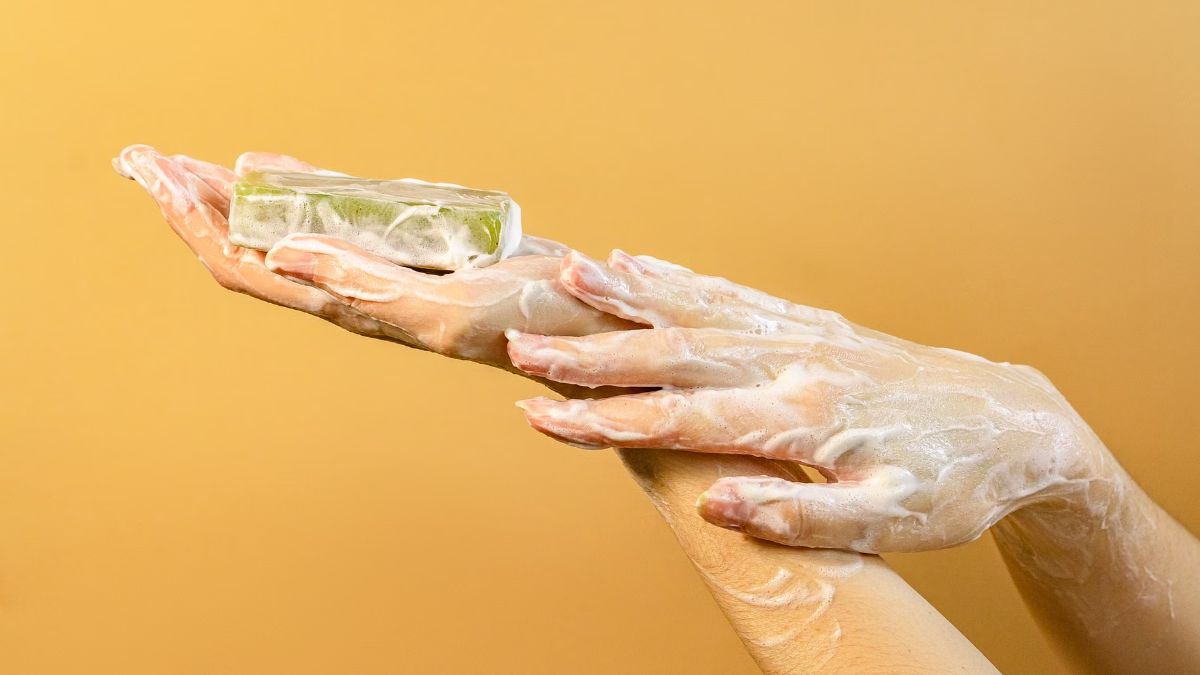
The USGS explains it: the calcium and magnesium in hard water react with soap to form a “soap scum” that clings to skin and surfaces. That uses up some of the soap, so you get less lather and need more product. In soft water there’s little to react with, so soap lathers easily and feels slippery, and that slippery feeling is simply the soap that’s still there until you rinse it off.
The same reaction happens with laundry detergent, which is why hard water can leave clothes dull and why the USGS notes it can shorten the life of fabrics.
Why hard water leaves scale and soft water doesn’t
When hard water is heated, the calcium bicarbonate in it breaks down and calcium carbonate comes out of solution as limescale. When drops of hard water evaporate on a tap or a glass, the dissolved minerals are left behind as white spots. Soft water carries too little calcium to do either in any noticeable amount.
The scale adds up. At 280 mg/L, the Las Vegas figure, a family of four sends about 124 kg (273 lb) of dissolved minerals through its pipes each year, by our calculation in what is hard water. Only part of it turns into scale, but that part ends up in water heaters, kettles and shower heads.
How to tell which you have
- Look up the number. Your water utility’s annual report lists hardness; compare it with the water hardness scale. Some cities, with their official figures: water hardness by city.
- Use a test strip. Quick and cheap, with a reading in gpg or ppm.
- Do the soap test. Shake a few drops of pure liquid soap in a bottle of tap water. Plenty of lasting suds suggests soft water; cloudy water with little foam suggests hard. It’s only a rough guide.
- Look at your kettle. A white crust after a few weeks is a strong hint of hard water with a lot of temporary (bicarbonate) hardness.
Is soft water better than hard water?
For appliances and cleaning, generally yes: less scale, less soap, fewer spots. For drinking, it depends on what you value. Hard water isn’t a health concern according to the USGS, and the Vermont Department of Health notes that it can contribute a little calcium and magnesium to your diet: an 8-ounce glass of moderately hard water holds roughly 50 to 75 mg of calcium, compared with about 300 mg in a glass of milk.
Softened water has one trade-off: it carries extra sodium, about 0.46 mg for every mg of hardness removed according to Vermont’s health department. That’s why many water companies suggest keeping the kitchen cold tap unsoftened. If you’re on a sodium-restricted diet, ask your doctor before drinking softened water.
Very soft water also has a downside for plumbing: it can be more corrosive. The Las Vegas Valley Water District points out that its hard water is less corrosive to pipes.
Turning hard water into soft water
| Option | Removes hardness? | Good for |
|---|---|---|
| Whole-house water softener | Yes, by ion exchange | Hard and very hard water, whole house. See water softeners explained. |
| Boiling | Partly: only temporary hardness, which turns into scale in the pot | Not practical as a treatment |
| Salt-free conditioner | No; changes how minerals behave when heated | Reducing scale without salt; results vary |
| Descaling now and then | No; removes scale after it forms | Moderately hard water. See how to remove limescale. |
Not sure it’s worth softening? Our do I need a water softener checklist weighs it up by hardness.
Frequently asked questions
Is hard water or soft water better for drinking?
Both are safe. Hard water adds a little calcium and magnesium; softened water adds sodium. Taste is a matter of preference.
Is soft water better for skin and hair?
Soap rinses off more easily in soft water, and hard water leaves more soap scum, as the USGS explains. Beyond that, effects vary from person to person.
Can you drink softened water?
Most people can. It contains extra sodium, so people on low-sodium diets should check with their doctor, and many households keep one unsoftened tap for drinking.
Does boiling make hard water soft?
Only partly. Boiling removes temporary hardness by turning it into scale, but permanent hardness (calcium and magnesium sulfates and chlorides) stays dissolved.
Is rainwater soft?
Yes. Rain falls with almost no minerals; water becomes hard by dissolving rock such as limestone and chalk on its way to your tap.