
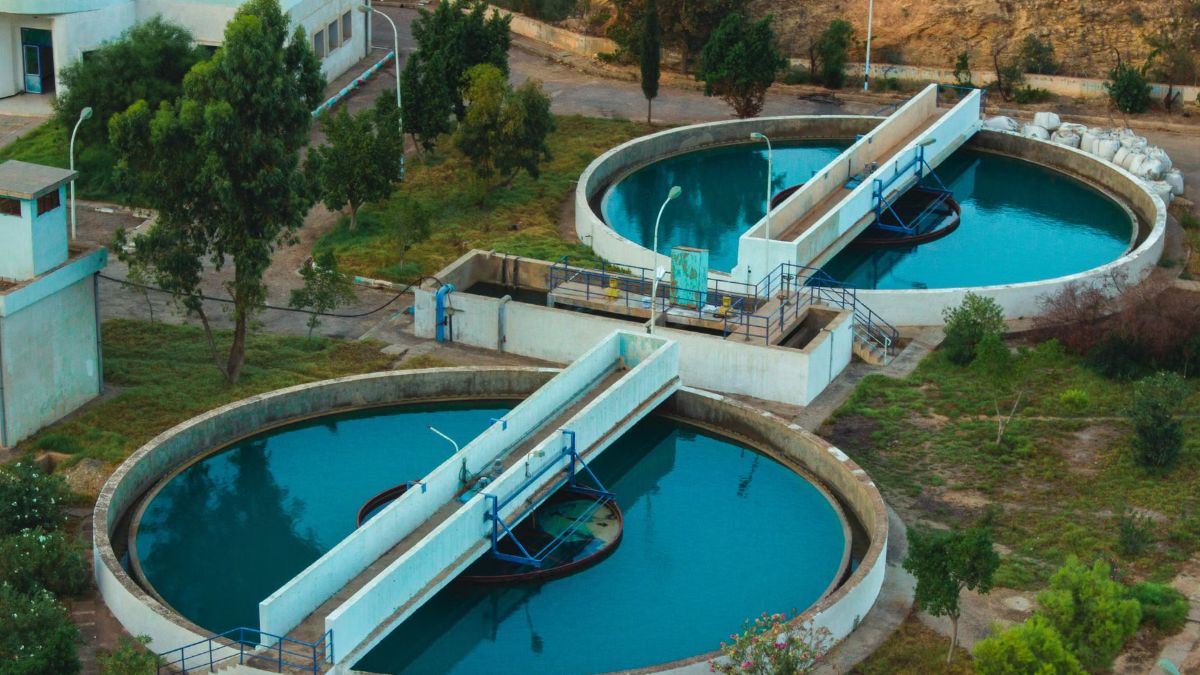
Salt-based water softeners aren’t banned nationwide, but some local agencies, mostly in California, can prohibit new self-regenerating softeners that drain to the sewer, because the salt they discharge raises chloride in rivers and recycled water. The best-known case is the Santa Clarita Valley, which banned new units in 2003 and later required existing ones to be removed. Elsewhere, utilities more often pay rebates to remove or upgrade softeners than ban them.
On this page
If you’re buying a softener, the question isn’t just “is it legal in my state?” but “what does my local sewer agency allow?” This guide explains how the rules work, what is usually still allowed, and how to check where you live.
Why softeners get restricted
A salt-based softener cleans its resin with brine and flushes that brine down the drain. Wastewater treatment plants aren’t built to remove it. The Minnesota Department of Health says home softeners drain to municipal plants “which are not designed to remove chloride”, and that chloride in water threatens fish and other aquatic life.
The amounts add up. Salt is about 61% chloride by weight, so the salt a softener uses ends up almost entirely in the waste stream:
| Water hardness | Salt per year | Chloride per year |
|---|---|---|
| 10 gpg | 349 lb (158 kg) | 212 lb (96 kg) |
| 15 gpg | 523 lb (237 kg) | 317 lb (144 kg) |
| 20 gpg | 697 lb (316 kg) | 423 lb (192 kg) |
Multiply that by thousands of homes and it can decide whether a treatment plant meets its chloride limit. The Minnesota Pollution Control Agency notes that where water isn’t softened centrally, home softeners “may be the primary source of chloride” reaching treatment plants.
What California law allows
California is where restrictions have gone furthest, and its Health and Safety Code sets out two layers of rules.
Rules for installing a softener
Section 116785 applies to residential softeners whose regeneration drains to the community sewer. It requires, among other things:
- third-party certification of at least 4,000 grains of hardness removed per pound of salt, for units installed on or after January 1, 2002;
- regeneration by demand control, not a simple timer;
- water conservation devices on fixtures using softened water, such as faucet flow restrictors;
- untreated water piped to outdoor hose bibs, with some exceptions.
The section also allows installation where regeneration happens at a separate, nonresidential facility, which is how exchange-tank services work.
When a local agency can ban them
Section 116786 lets a local agency, by ordinance, limit or prohibit the installation of residential softeners that discharge to the sewer. Before it can, it has to find that the restriction is a necessary way to comply with discharge or water recycling requirements set by a regional water board, and back that up with:
- an assessment of the feasibility of alternatives and the salt reduction the ordinance would achieve;
- limits already being enforced on saline discharges from businesses;
- an independent study of all the salinity sources.
An ordinance under this section has to be prospective: it “may not require the removal” of softeners installed before it took effect.
The Santa Clarita Valley case
The Santa Clarita Valley Sanitation District discharges treated wastewater to the Santa Clara River and has to meet the state’s chloride limit for it. Its explanation is that too much salt in the river may harm crops downstream, and that removing the salt at the plant would require costly advanced treatment.
The timeline, from the Los Angeles County Sanitation Districts and trade press reports:
- March 27, 2003: an ordinance banning the installation of new residential self-regenerating softeners takes effect. Water Technology reported penalties of up to $1,000 and/or 30 days in jail, an exemption for homes on septic tanks, and that businesses had been barred from using such softeners since 1961.
- November 4, 2008: voters approve Measure S, the Santa Clara River Chloride Reduction Ordinance of 2008.
- June 30, 2009: the deadline for removing all residential automatic softeners.
The Sanitation Districts say more than 8,000 salt-discharging automatic softeners have been removed.
What’s usually still allowed
A ban on self-regenerating softeners doesn’t mean a ban on treating your water. According to Water Technology’s report on the 2003 ordinance, it didn’t cover:
- exchange-tank softeners, which a service company swaps and regenerates off-site;
- filtration and activated carbon units;
- reverse osmosis units.
Salt-free conditioners don’t discharge brine at all, but they don’t remove hardness either. Our comparison of salt-free and salt-based softeners explains the difference, and softener vs filter covers what filters do.
Rebates instead of bans
Many utilities prefer paying people to change their softener. A 2019 guide from the Minnesota Pollution Control Agency lists examples of local programs:
| Place | Offer |
|---|---|
| Inland Empire Utilities Agency, CA | 100% of reasonable value ($300–$2,000) plus free removal |
| Brentwood, CA | $700 to remove a unit; $300 towards a first non-salt system |
| Solvang, CA | $400 bill credit to upgrade to high-efficiency or salt-free |
| Waterloo, WI | Up to 50% of a demand-initiated unit, max $400 |
| Pinckney, MI | 50% rebate, up to $300 |
The same guide notes that Madison, Wisconsin’s sewerage district required replacement systems with at least 4,000 grains per pound of salt efficiency. Efficiency rules like that cut chloride without taking softeners away.
How to check the rules where you live
- Find out who treats your wastewater. It’s often a sanitation district or the city’s public works department, not your water supplier.
- Search its website for “water softener” or “self-regenerating”. Agencies with restrictions usually have a dedicated page.
- Ask about rebates before you buy. Removal and upgrade programs come and go.
- On a septic system, the EPA suggests confirming with the manufacturer or a service provider that the softener won’t overload the system or affect its warranty.
The EPA’s WaterSense guide sums it up: because softeners discharge salt to wastewater, some jurisdictions prohibit them, so check local rules first.
If you can keep your softener: use less salt
Whether or not your area restricts softeners, less salt means less chloride and a smaller bill. The Minnesota Department of Health’s advice is simple: set the softener to your actual hardness, because a setting that’s too high “will cost more to operate and waste water”. It also suggests leaving toilets, outdoor taps and other cold taps unsoftened.
Is your softener using more salt than it needs? Enter your hardness and household size to see how much salt an efficient unit should use in a year.
An efficient, correctly sized unit regenerates less often. Our guides to the hardness setting and sizing a softener show how.
Choosing a new, efficient unit? The size calculator shows which capacity fits your water and how often it will regenerate.
Frequently asked questions
Are water softeners illegal in California?
No, not statewide. California law sets efficiency and installation rules, and lets local agencies ban new self-regenerating units if they make specific findings about salt discharges.
Why did Santa Clarita ban water softeners?
To meet the state’s chloride limit for the Santa Clara River without costly advanced treatment. The ban on new units began in 2003, and voters approved removing existing ones in 2008.
Can I use a salt-free softener where salt-based ones are banned?
Generally yes, because it discharges no brine. But it doesn’t remove hardness, so it won’t give you soft water.
Do bans apply to homes on septic tanks?
The 2003 Santa Clarita ordinance exempted septic homes. Rules vary, so check locally, and ask the septic system’s maker or servicer about softener discharge.
Sources
- California Health and Safety Code § 116785: softener installation requirements
- California Health and Safety Code § 116786: local restrictions
- Los Angeles County Sanitation Districts: Automatic water softeners in the Santa Clarita Valley
- Water Technology: Ordinances against water softeners in Santa Clarita Valley (2003)
- Minnesota Pollution Control Agency: Guide to developing a local water softener rebate program (2019, PDF)
- Minnesota Department of Health: Home water softening FAQs
- US EPA WaterSense: Soften water without wasting it (May 2026, PDF)